タグ: 水玉模様

  • 天然染料だけでカラフルな型染ができないものか?

    天然染料だけでカラフルな型染ができないものか?

    少し前から“天然染料だけでカラフルな型染ができないものか?”と試行錯誤を続けています。化学染料が登場する以前から友禅や紅型があったので、必ずできるはずなのですが、それをネットで調べて模倣するのではなく、自分なりに探求し、何かしらの結果を出したいと思っています。
    以前にも紹介しましたが(『天然染料のみでの表現』)、“植物から得たタンニンで布を下染めし、媒染剤で反応させて異なった色を表現する染色技法”と“顔料を染め付ける方法”の2種類を同時に使っています。
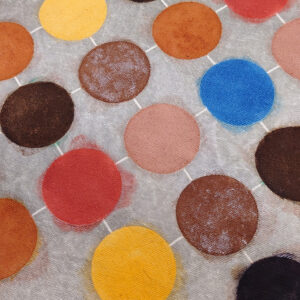
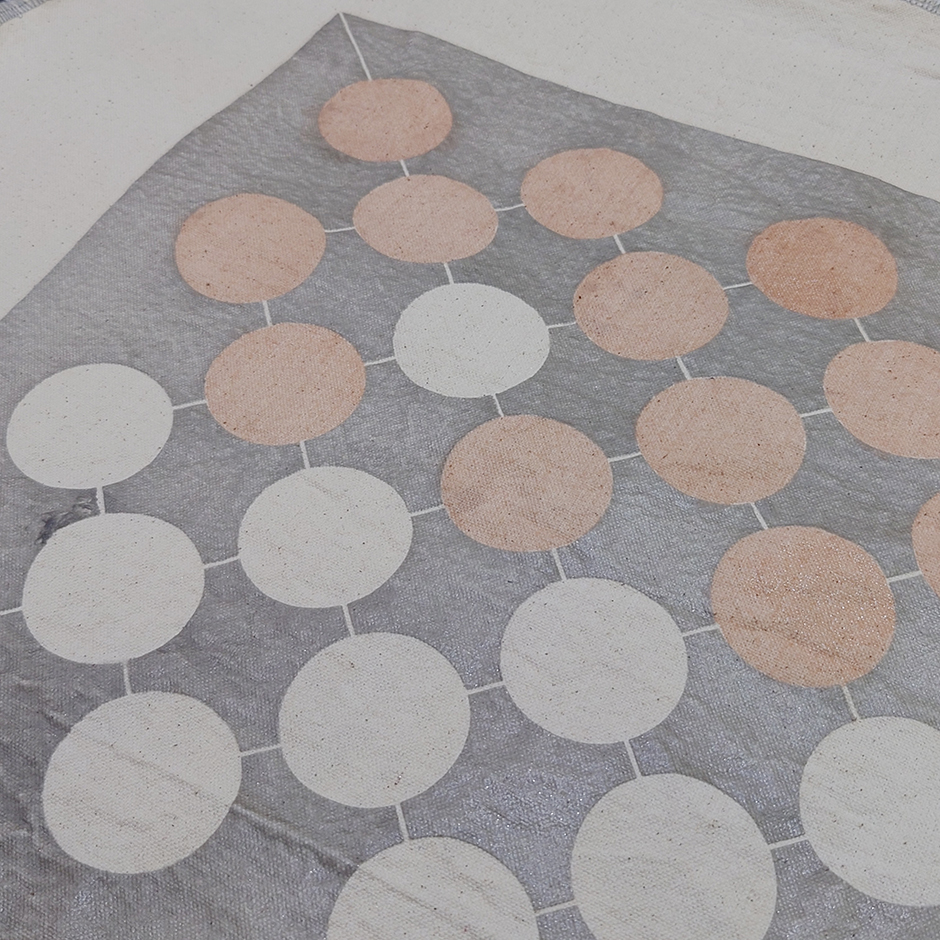
    これは、その二つの方法で綿布(帆布)に染めたものですが、イメージした色が出たものと、まったくそうではないものが混在しています。
    特に、顔料染めで色の4原色が可能になれば、ほぼ全ての色が可能になるはずです。、何かしらの結果まで、あと一歩です!

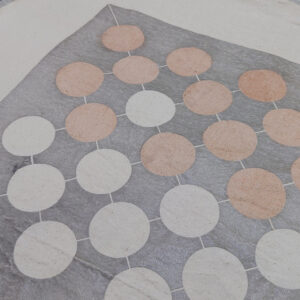
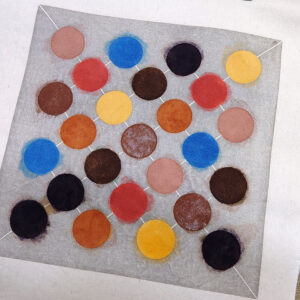
    ▼ 型染に天然染料で様々な色を挿してみた。
    天然染料だけでカラフルな型染ができないものか?

    天然染料だけでカラフルな型染ができないものか?

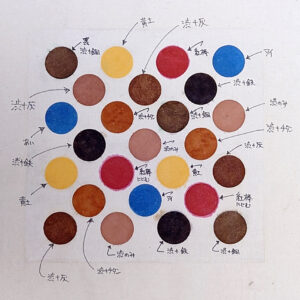
    ▼ 糊を落としてみた。思ったとおりになったところ、ならなかったところ—。もう少し研究が必要です。
    天然染料だけでカラフルな型染ができないものか?


    For some time now, I have been doing trial and error, wondering if it is possible to make colorful stencil dyeing using only natural dyes. Colorful stencil dyeing has existed since before chemical dyes appeared in Japan, so it should be possible, but I want to explore it in my own way and produce some kind of result, instead of looking it up on the internet and imitating it.
    As I wrote before, I use two methods at the same time: dyeing cloth with plant tannins and reacting with different mordants to express different colors, and a method of dyeing pigments.
    This is a cotton fabric (canvas) dyed by these two methods. Some have the colors I imagined and others do not at all.
    In particular, if the four primary colors become possible with pigment dyeing, almost all colors should become possible. You’re one step away from getting results!
    ※ I am sorry that my English is so bad.


    一段時間以來,我一直在反複試驗,想知道是否可以僅使用天然染料進行彩色模板染色。 彩色模板染色在日本出現化學染料之前就已經存在了,所以應該是可能的,但我想以自己的方式探索它並產生某種結果,而不是在互聯網上查找並模仿它。
    正如我之前寫的,我同時使用兩種方法:用植物單寧對布料進行染色並與不同的媒染劑反應以表達不同的顏色,以及用顏料染色的方法。
    這是用這兩種方法染色的棉織物(帆布)。 有些有我想像的顏色,有些則根本沒有。
    特別是,如果四基色通過顏料染色成為可能,那麼幾乎所有顏色都應該成為可能。 您距離獲得結果僅一步之遙!
    *對不起,我的台灣語不好。
  • 天然染料でカラフルなドット柄に!

    天然染料でカラフルなドット柄に!

    植物から得たタンニンで布を染め、さらにそれを各種の媒染剤で反応させて色や模様を表現する染織品が古くから世界各地に存在しています。西アフリカの伝統的な染織品であるボゴラン布をはじめ、北インドのブロック・プリント、さらには日本の大島紬が、そうした原理で染められています。
    以前からとても興味があった技法なのですが、なかなか自分の作品として昇華させることができず、その思いのまま手付かずの状態になっていました。
    最近、ドット柄のカバンを作り始めたのですが、その作業の途中で、ふと「あの方法で、いろんな色のドット柄にしよう!」という考えが浮かびました。
    先述した世界各地の染色技法に、日本の伝統的な方法、さらに自分なりの方法を加えて“天然染料だけでカラフルなドット柄”にチャレンジしようと思います。
    さて、うまくいきますやら!? 楽しみにしていてください!

    天然染料でカラフルなドット柄に!

    ▼ 以前に染めた「ボゴラン布」です。ボゴラン布については『西アフリカの伝統的な泥染め』をご覧ください。
    天然染料でカラフルなドット柄に!


    Dyed fabrics that express colors and patterns with various mordants on cloth dyed with vegetable tannins have existed all over the world for a long time. Bogoran cloth, a traditional dyeing product from West Africa, block prints from North India, and Oshima Tsumugi from Japan are all dyed using this principle.
    I’ve been very interested in this technique for a long time, but I couldn’t really sublimate it into my own work, and it remained untouched.
    Recently, I started making a bag with a polka dot pattern, and while I was working on it, I suddenly came up with the idea of “Let’s use that dyeing method to make polka dot patterns in various colors!”
    I would like to add traditional Japanese methods and my own methods to the above-mentioned dyeing techniques from all over the world and try to create “colorful dot patterns using only natural dyes”.
    I don’t know if it will work, but please look forward to it!
    ※ I am sorry that my English is so bad.


    在植物單寧染色的布料上用各種媒染劑表達顏色和圖案的染色織物在世界各地早已存在。 西非的傳統染色產品博戈蘭布、北印度的木版染色、日本的大島紬都是利用這一原理染色的。
    很長一段時間以來,我對這種技術很感興趣,但一直沒能真正將其昇華到自己的作品中,一直保持原狀。
    最近,我開始做一個波點圖案的包包,在做的過程中,我突然有了一個想法:“我們用那個染色方法來製作各種顏色的波點圖案吧!”
    我想將日本的傳統方法和我自己的方法添加到上述來自世界各地的染色技術中,並嘗試創造“僅使用天然染料的彩色點圖案”。
    不知道能不能成功,敬請期待!
    ※對不起我可憐的台湾語。